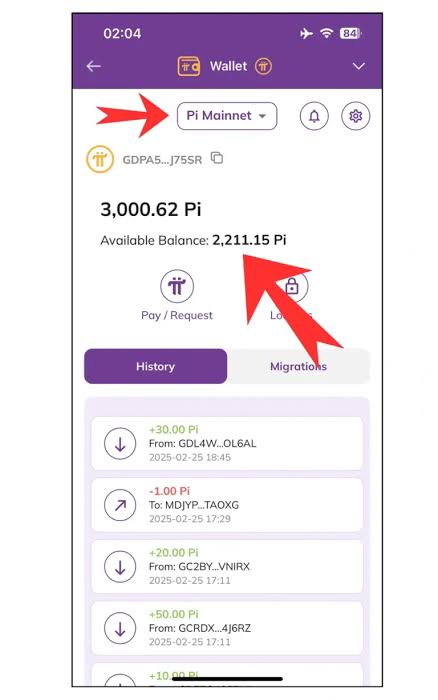
Two jobs hide behind one search term. Cashing out Pi you mined and buying Pi Coin with money have separate prerequisites and separate ways to fail. Sellers begin on a phone, holding a balance that is not on any blockchain and cannot move until Pi's own KYC and migration release it. Buyers begin at an exchange, never open the Pi app, and face one real decision: whether to leave the coins in somebody else's custody. The two procedures meet in one place, the venue in the middle.
That venue is rarer than the listing tables suggest. More than twenty exchanges were checked against their own public REST endpoints on 27 July 2026 — the configuration that fills their live deposit and withdrawal screens — and only five carried a working two-way native PI rail: Kraken, OKX, Bitget, Gate and LBank. XT.COM sends PI out but has deposits switched off. Six more quote a PI price while reporting no on-chain rail at all: HTX, BitMart, DigiFinex, CoinW, WEEX and Coinstore. Trade there, yes; move PI in or out, no. BitMart, formerly the largest PI market, is also closing: deposits stopped 26 July 2026, trading ends 26 August 2026, operations cease 31 January 2027.
The popular risk model is wrong too. Pasting an Ethereum 0x… address into the Pi Wallet does not burn your Pi; it fails a checksum and nothing is signed. The three dangers that are real appear below, each at the step where it bites.
Before you start: what you need
Decide which job you are doing. The shopping lists barely intersect.
Job one · Selling
Cashing out Pi you mined
Pi's own KYC, a completed Mainnet Checklist, a passphrase you hold, and a venue whose PI deposits are on. The waiting runs to weeks; the trade takes minutes.
Job two · Buying
Buying PI with money
An exchange account, that exchange's KYC, and fiat or a stablecoin. The Pi app plays no part. PI withdrawals matter only if you intend to self-custody.
Sellers face one gate with no way round it: only migrated mainnet Pi can be sold. The large number in the mining app is a database entry, and Pi's own documentation states that unverified, unmigrated Pi is not transferable. The "transferable balance" is a forecast, not a holding — Pi calls it a pessimistic estimate and says the amount finally migrated can be higher. KYC plus the Mainnet Checklist is what puts a real balance on-chain under your passphrase; our Pi Coin wallet guide covers that side. Anyone offering to buy or unlock your app balance is describing a transfer that is not technically possible.
Buyers get the easier day, with one non-obvious choice: a venue that trades well may be useless for leaving with your coins. Check the withdrawal rail before funding.
| Venue | PI market | Deposit PI | Withdraw PI | Memo |
|---|---|---|---|---|
| Kraken | PI/USD, PI/EUR | Yes | Yes | G… yes, M… no |
| OKX | USDT, USD, USDC, EUR, TRY, BRL | Yes | Yes | No, issues M… |
| Bitget | PI/USDT | Yes | Yes | Disputed |
| Gate | PI/USDT | Yes | Delayed | Yes |
| LBank | PI/USDT | Yes | Yes | No |
| XT.COM | PI/USDT | No | Yes | Yes |
| BitMart | Winding down | No | No | n/a |
| HTX | No chain configured | No | No | n/a |
| DigiFinex, CoinW, WEEX, Coinstore | PI/USDT | No | No | n/a |
Verify the Bitget row yourself: its API reports no tag needed, while Bitget's own academy pages insist a memo is mandatory. Venue detail sits on our Pi Coin exchange and where to buy Pi Coin pages.
Buying Pi Coin, step by step
The easy direction. Nothing here touches the Pi app.
Choose a venue that can actually send you native PI
Confirm a working PI withdrawal, not merely a PI market: Kraken, OKX, Bitget, Gate or LBank. If you plan to leave the coins there, the rail matters less — but you are then holding a claim on a company rather than a coin.
Complete the exchange's KYC before you fund it
Every venue listing native PI verifies identity. Finish that first, so a compliance hold cannot strand money you have already sent. Kraken and OKX both warn that geographic restrictions apply without listing the excluded states.
Fund the account in fiat or a stablecoin
Nearly every PI market is quoted in USDT. Kraken runs PI/USD and PI/EUR; OKX adds USDC, EUR, TRY and BRL. If your currency is absent, you are buying a stablecoin first and paying a conversion somewhere.
Place a limit order, not a market order
PI turned over roughly $8m to $12m across all venues in the 24 hours to 27 July 2026, against a market capitalisation near $896m. On a book that thin, a market order accepts whatever the far side of the spread happens to be, and that gap exceeds any fee you will pay. A limit order names your price and waits. Kraken's minimum order is 40 PI, taker fee 0.40% falling to 0.05% by tier.
Withdraw to a Pi address you control
Copy your 56-character
G…address from the Pi Wallet in Pi Browser and select the network named literallyPI. Send a test amount that clears the destination minimum, confirm arrival, then send the rest. Leave 0.98 π behind: Pi's base reserve is 0.49 π and two are held, so a wallet never empties to zero.
The withdrawal dropdown is where wrong-network losses really happen
XT.COM's own withdrawal configuration exposes three wrapped PI entries beside the native rail — XT Smart Chain, BNB Smart Chain and Ethereum, with fees of 12.24, 6.1 and 86 PI. Those are unaffiliated tokens at 0x… addresses, not Pi. Pi has no bridge, no canonical wrapped version and no contract address on any chain, so anything arriving at a hex address is a different asset wearing the name.
Selling Pi Coin, step by step
The direction that goes wrong: one prerequisite you cannot buy past, a memo rule most articles state incorrectly, and a deposit that either credits or becomes a support ticket.
Confirm the Pi is genuinely on-chain
Paste your
G…address into the official explorer atblockexplorer.minepi.comand read what the ledger reports. That figure, not the app's, is what you can sell. If the explorer shows nothing, migration has not happened and no exchange can help.Copy the deposit address, and the memo if the venue issues one
Follow the exchange's own deposit screen, not a guide. A memo is required when the venue gives you a
G…address, and is not required for anM…muxed address, which encodes the routing identifier inside the address itself. Kraken states this explicitly for Pi deposits; OKX issuesM…addresses and says nothing goes in the memo field; Gate and XT.COM flag a memo as mandatory in their own configuration. There is no Pi-wide rule.Send a test transaction, every time
One test send costs 0.01 π and proves four things: the network is right, the address pasted intact, the memo is read, and the rail is on. It must clear the receiving minimum to count — Kraken wants 20 PI, XT.COM 1,000 PI, and Bitget's floats with the price.
Wait for the credit, then check it is tradable
A ledger closes about every five seconds, so the chain is never the slow part. Bitget requires 20 confirmations; most venues publish nothing. A balance can show as credited but not yet released for trading, so wait for a tradable balance before placing orders.
Sell into the book, then off-ramp the proceeds
Place a limit sell rather than dumping into the bid, then withdraw fiat through the venue's rail — and expect that leg, with its bank transfers and weekend cut-offs, to take far longer than anything on-chain. Regional detail matters: see selling Pi in India and the same question in the USA.
The famous Pi loss story is a myth, and it hides three real ones
"Sending PI to a 0x… address burns it" is false. A Pi address is a 56-character StrKey with a version byte and a CRC16 checksum; an Ethereum address is 40 hex characters with none of that, so the decode fails in the client. Nothing is signed and no fee is charged.
Danger one — a valid but wrong G… address. The only genuinely irreversible case. The checksum catches typos but cannot know a well-formed address belongs to somebody else.
Danger two — an omitted or incorrect memo. The Pi is not destroyed; it lands in the venue's pooled account with nothing attributing it to you. Kraken's guidance is that missing or incorrect memo data may cause delays and in some cases makes funds unrecoverable. A memo belonging to another customer is worse, because it may credit cleanly to the wrong account.
Danger three — a wrapped, non-native chain in a withdrawal menu. Live on XT.COM today.
And the trap nobody warns about: the same seed produces the identical G… address on both Pi and Stellar, while the balances sit on two unrelated ledgers. The address looks valid in both places, and no signature crosses between them.
Fees you will actually pay
The chain is nearly free and the exchange is not, but neither is usually the biggest number.
| Cost | Amount | Notes |
|---|---|---|
| Pi network fee | 0.01 π per operation | Not per transaction: a sampled twenty-operation transaction paid exactly 0.2 π. Price-independent, so about $0.0008 today. |
| Base reserve | 0.49 π | Two reserves, 0.98 π, stay locked in the account. Documented nowhere by Pi, which is why small balances look stuck. |
| Kraken deposit | Free, min 20 PI | The only venue publishing a full native PI schedule on its own site. |
| Kraken withdrawal | 3 PI, min 10 PI | About 300× the network fee. Order minimum 40 PI; taker fee 0.40% to 0.05%. |
| Bitget withdrawal | 0.04 PI | Minimum near 123.8 PI, pegged to roughly $10, so it floats. |
| LBank withdrawal | 1 PI, min 1 PI | The lowest minimum found anywhere. |
| XT.COM withdrawal | 12.2 PI, min 1,000 PI | Deposits disabled: exit-only. |
| OKX, MEXC, Gate | Not published | None exposes a PI withdrawal fee publicly; OKX says fees are dynamically adjusted and shown only at withdrawal. We will not guess. |
| Spread and slippage | Usually largest | Kraken's two PI pairs together traded about $11,500 in 24 hours on 27 July 2026. Depth costs more than any fee schedule. |
Read the last row twice before optimising the one above it. Bitget's 0.04 PI withdrawal really is 75 times cheaper than Kraken's 3 PI — and a sell order that walks two cents down a thin book costs more than both together.
Where these numbers come from
The 0.01 π fee, the 0.49 π base reserve and the twenty-operation transaction that paid 0.2 π were read off the Pi mainnet through its public API. Every exchange figure comes from that exchange's own public REST endpoint, the configuration behind its live withdrawal screen, because third-party "PI withdrawal fee" tables were repeatedly found to be quoting USDT fees mislabelled as PI. Minimums float with the price; read the live screen before sending.
Affiliate disclosure: the two buttons above open a third-party exchange in a new tab and are tagged nofollow sponsored. We may earn a commission at no extra cost to you. This is not the official Pi Network app, the official Pi Wallet, or an endorsement — and the PI instrument sold there is an IOU, not native mainnet Pi. Nothing here is financial advice.
How long each step takes
The blockchain is the fastest component, which surprises people who expect the opposite.
A ledger closes about every five seconds, so a transfer between two addresses is effectively instant. Everything slow is human. Pi's own KYC combines machine checks with paid human validators, averaging around twenty validations per application; Pi has said an AI integration halved the review queue, but no guaranteed turnaround has ever been published and we will not invent one. Exchange KYC is a separate queue. Fiat withdrawal is reliably the slowest leg, because it runs on banking hours.
Plan for minutes on-chain, hours to days for exchange operations, and days to weeks for either KYC. Start both verifications before you need the money.
When something goes wrong
Four failures account for nearly everything, and three are recoverable with the right evidence.
The deposit was never credited
Usually a missing or wrong memo on a G… address. The Pi settled into the venue's pooled account, and automated crediting has nothing to attribute it to. Find the transaction hash on blockexplorer.minepi.com, screenshot the sending screen, and open a ticket quoting the hash, the exact amount, the timestamp and the memo you used. Bitget runs an uncredited-deposit return form. Recovery is manual and not guaranteed.
The transaction is not visible anywhere
If the explorer has no record, nothing left your wallet — good news. A payment to a malformed destination is rejected before signing, and one to a valid but unactivated address that would leave it below the minimum fails with op_no_destination, consuming the fee while the Pi stays with you. Check you are reading mainnet rather than testnet, then re-send.
The withdrawal is held for review
Venues hold outbound crypto for compliance checks, new-address cooling periods and travel-rule collection; Gate's own configuration flags PI withdrawals as delayed by default. There is no technical fix. Supply what compliance asks for and wait — which is why the test transaction goes first, when nothing is riding on it.
KYC rejected, or stuck for weeks
Resubmit with better inputs, not the same ones: sharp document photographs without glare, a name and date of birth matching the document exactly, a liveness check in even lighting. Pi's KYC and an exchange's KYC are unrelated systems. If Pi's queue is the blocker, no exchange can move your balance, because the Pi is not on-chain yet.
Tax and record-keeping
Tax treatment of Pi is jurisdictional and we are not qualified to advise on yours. What is universal: reconstructing records afterwards is far harder than keeping them, and thin markets produce prices a tax authority may query.
- Date and time of every acquisition, disposal, deposit and withdrawal, in one timezone.
- Quantity of PI to full precision, plus the fee paid.
- Value in your own currency at the moment of the transaction, and the source you took it from. On an asset quoted in USDT, record the conversion used.
- Counterparty — which exchange, wallet or person.
- Transaction hash for anything on-chain: the only permanent, independently checkable record you will have.
- Statements exported while the account still exists. BitMart's shutdown is the argument — a closed exchange takes its trade history with it.
Mined Pi, purchased Pi and Pi received from another person are often treated differently, and lockups complicate it further. Country notes live on our India and USA pages; anything binding should come from a professional in your jurisdiction.
Mistakes that cost the most
Ranked by what they cost, not by how often they are written about.
- Sending PI to a venue with no deposit rail. HTX, BitMart, DigiFinex, CoinW, WEEX and Coinstore quote PI and cannot receive it.
- Leaving out a required memo. Not a burn, but a manual recovery process with no guarantee at the end.
- Using a memo belonging to someone else. Worse than omitting one, because it may credit cleanly to the wrong account.
- Picking a wrapped chain in a withdrawal menu. You receive an unaffiliated token at a hex address, and no bridge back exists.
- Trying to move the mining app balance. It is a database row. Nothing transfers before KYC and migration.
- Assuming MetaMask, Trust Wallet, Ledger or Trezor will hold Pi. None does. Ledger's coin API returns 317 assets with no PI entry, Trezor's BIP-44 documentation lists none, and SLIP-44 coin type
314159is a namespace reservation rather than firmware support. MetaMask and Trust Wallet are structurally incapable: Pi has no chainId and no EVM RPC endpoint to point them at. - Market-ordering a meaningful size. On this book the spread is the fee that matters.
- Skipping the test transaction. It costs 0.01 π and catches most of the above.
Verdict: the short version
Five venues, one memo rule, one test send
Buying: pick from the five venues with a verified two-way rail — Kraken, OKX, Bitget, Gate, LBank — finish KYC before funding, use a limit order, withdraw to your own G… address on the network named PI. Selling: nothing starts until KYC and the Mainnet Checklist have put a real balance on-chain, and then the only technical question is which address your exchange handed you — memo for G…, no memo for M…, never a blanket rule. The chain costs 0.01 π per operation and settles in five seconds; the expensive parts are the spread, the withdrawal fee and the queue in front of a human reviewer. Send a test amount on every new address and every new venue, and the worst realistic outcome is 0.01 π spent on a lesson.
Frequently asked questions
I deposited PI to an exchange and it has not been credited. What now?
The usual cause is a missing or wrong memo on a G… deposit address. The Pi left your wallet and landed in the exchange's pooled account with nothing identifying you. Find the transaction hash on blockexplorer.minepi.com, screenshot the sending screen, and open a support ticket quoting the hash, the exact amount and the timestamp. Recovery is a manual process, it is not guaranteed, and Kraken warns that in some cases the funds are unrecoverable.
Can I sell the Pi balance showing in the mining app?
No. Pi Network's own documentation is explicit that unverified and unmigrated Pi in the mobile mining app is not transferable. Only a migrated mainnet balance can be sent to an exchange and sold. Getting there requires passing Pi's KYC and completing the Mainnet Checklist. Anyone offering to buy, unlock or convert your app balance directly is running a scam, because the transfer they describe is not technically possible.
Is there a minimum amount of Pi I can deposit or withdraw?
Yes, and it varies sharply by venue. From the exchanges' own public APIs on 27 July 2026: Kraken required a minimum deposit of 20 PI and a minimum withdrawal of 10 PI, Bitget a minimum withdrawal near 123.8 PI, LBank 1 PI, and XT.COM 1,000 PI. Minimums are usually pegged to a dollar amount, so they float with the price. Check the live figure before sending, and never send below it.
How long does KYC take?
Nobody publishes a guaranteed turnaround, and we will not invent one. Pi's own KYC is a hybrid of machine checks and paid human validators, averaging around 20 validations per application; Pi has said AI integration cut the human review queue by half. Exchange KYC is a separate process with its own queue. Treat both as taking anywhere from minutes to weeks, and start them before you need the money.
I sent Pi with the wrong memo. Can I get it back?
Only the receiving exchange can help, and only manually. The blockchain has no reversal mechanism. Your Pi is sitting in the exchange's account; the exchange simply does not know it is yours. Open a ticket immediately with the transaction hash, the amount, the timestamp and the memo you actually used. Kraken's own guidance states that missing or incorrect memo data may cause delays and in some cases makes funds unrecoverable.
Can I withdraw PI to MetaMask, Trust Wallet or a Ledger?
No. Pi runs its own layer-1 chain forked from stellar-core, with no EVM compatibility and no token contract address anywhere. MetaMask and Trust Wallet cannot derive a Pi address; neither Ledger nor Trezor lists Pi among supported assets. Native PI withdrawals go to a Pi G… address from the Pi Wallet inside Pi Browser. Any PI you can add to an EVM wallet is a different, unaffiliated token.
Which exchange is cheapest for selling Pi?
Withdrawal fees are the only part we could verify first-hand, and they range from 0.04 PI on Bitget to 3 PI on Kraken and 12.2 PI on XT.COM. But the fee is rarely the biggest cost. Spread and slippage on a market turning over single-digit millions a day usually dominate, and Kraken's PI/USD and PI/EUR pairs together traded roughly $11,500 in 24 hours on 27 July 2026. Depth matters more than the fee schedule.
Do I really need to send a test transaction first?
Yes, on every new address and every new venue. A test send costs 0.01 π in network fees and proves four things at once: that the network selection is right, that the address was pasted intact, that the memo is being read, and that the venue's rail is actually switched on. It has to clear the receiving venue's minimum deposit to count, so check that figure before choosing the amount.